
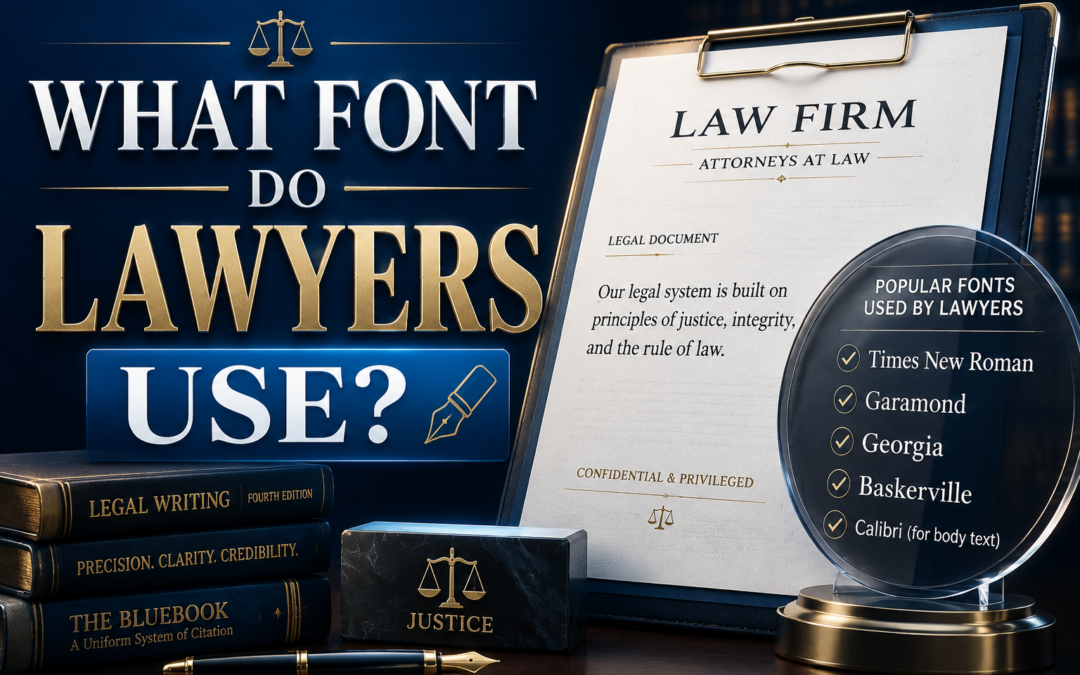
What font do lawyers use when they want legal documents to look professional, readable, and court-ready? Most lawyers still use familiar fonts like Times New Roman, Arial, Century Schoolbook, Georgia, Garamond, Bookman Old Style, Cambria, and Calibri, but the best choice depends on the document, court rules, and whether the reader will view it on paper or a screen. Font choice may seem small, yet in legal writing it shapes clarity, trust, authority, and the first impression your document creates before anyone reads the argument.
Why Legal Font Choice Matters
A legal font does more than just make words appear on a page; it affects how easily judges, clients, opposing counsel, and business partners can read serious information. If you also create visual text outside formal legal documents, a tool like build fonts for social media, branding, and creative text can help you understand how style changes tone, while legal work still needs restrained fonts that protect clarity and professionalism. In law, the safest font is not always the most decorative or modern one, but the one that keeps dense language readable without distracting from the message.
Lawyers write for people who must carefully process details, including deadlines, obligations, definitions, penalties, rights, exceptions, and evidence. A cramped font can make a contract feel harder than it needs to be, while a clean font can make even complex clauses easier to follow. That is why strong legal formatting combines the right typeface, consistent spacing, clear headings, and enough white space to support careful reading.
What Font Do Lawyers Use Most Often?
The most common answer to the question of what font lawyers use is still Times New Roman, especially in older law firms, court pleadings, memos, and contracts. It became popular because it is widely available, compact, familiar, and accepted in many professional settings. However, many modern lawyers now prefer fonts that feel cleaner on screens, such as Arial, Calibri, Georgia, Cambria, and Century Schoolbook.
Times New Roman works, but it can also look like a default choice rather than a thoughtful design decision. For high-stakes filings, lawyers often check the court’s rules first, then choose a font that satisfies those rules while improving readability. In practical terms, the best legal font is the one that looks professional, prints cleanly, converts well to PDF, and does not make the reader work harder.
Serif Fonts Lawyers Commonly Use
Serif fonts have small strokes at the ends of letters, which can guide the eye across long printed paragraphs. That is why many lawyers use serif fonts such as Times New Roman, Century Schoolbook, Georgia, Garamond, Baskerville, Bookman Old Style, Book Antiqua, and Cambria for briefs, contracts, agreements, and memoranda. These fonts feel traditional, serious, and stable, which suits legal writing that must communicate authority.
Not every serif font belongs in a legal document, because personality can quickly become a distraction. Decorative or novelty styles may work in themed design, and a papyrus font generator is useful when someone wants ancient-looking creative text, but legal documents usually need sober typefaces that do not compete with the substance. In a professional legal setting, the font should support your argument quietly instead of becoming the loudest thing on the page.
Sans Serif Fonts Lawyers Use For Digital Reading
Sans serif fonts do not have the small finishing strokes found in serif fonts, so they often look cleaner on screens. Lawyers use Arial, Helvetica, Calibri, Verdana, Century Gothic, Lato, Open Sans, and Roboto for emails, presentations, law firm websites, client guides, and documents that will mainly be read digitally. These fonts can make short explanations, headings, checklists, and online legal content feel more accessible.
The same principle applies when choosing fonts for social platforms, because screen-first writing needs instant clarity. A TikTok font generator is designed for creative social text, while legal digital content should borrow the readability lesson without copying the playful style. When your client opens a PDF on a phone, a clean sans serif font can reduce friction and make important terms easier to scan.
Best Fonts For Court Filings
Court filings should always follow the court’s specific rules before any personal preferences come into play. Some courts require or strongly prefer certain font families, point sizes, spacing, margins, or line formats, and ignoring those details can make a filing look careless. In the USA, lawyers should check the applicable local rules, appellate rules, judge-specific preferences, and e-filing requirements before submitting anything.
Century Schoolbook is often favored for briefs because it has generous spacing and strong readability. Times New Roman remains common, but some judges and legal-writing experts dislike it because it can feel overused and visually cramped. Georgia, Cambria, and Bookman Old Style can also work well when the rules allow them, especially where readability and a traditional legal appearance both matter.
Best Fonts For Contracts And Agreements
Contracts need fonts that make obligations, conditions, definitions, and exceptions easy to read without visual confusion. Times New Roman, Georgia, Cambria, Arial, Calibri, and Book Antiqua are sensible choices because they are professional, widely available, and easy to preserve in PDFs. The best contract font should be stable across devices so that headings, numbering, clauses, and signature blocks do not shift unexpectedly.
For contracts, consistency matters as much as the font itself. Use one body font, one heading style, and a clear hierarchy for sections, subsections, definitions, schedules, and exhibits. Avoid mixing too many fonts because a contract should feel controlled, not like a collection of copied clauses pasted from different templates.
Best Fonts For Legal Letters And Client Documents
Legal letters and client-facing documents need a slightly warmer balance than court filings. They still require professionalism, but they should also feel clear and approachable because clients may not read legal language every day. Arial, Georgia, Calibri, Cambria, and Garamond can all work well when paired with clean spacing and plain-language explanations.
If the letter is formal, a serif font can create a traditional law-office tone. If the letter explains options, next steps, invoices, intake instructions, or settlement terms, a clean sans serif font may feel easier to read. Your goal is to make the client understand the message quickly without reducing the seriousness of the subject.
Recommended Font Size For Legal Documents
Most legal documents use 12-point font as a practical minimum, while 14-point font can improve readability and may be required in some courts. A larger size helps when documents are read on screens, printed in long packets, or reviewed by people who need clearer text. Smaller fonts may save space, but they can make the document feel crowded and harder to trust.
Font size should also match line spacing, margins, and paragraph structure. A 12-point font with tight spacing can feel harder to read than a 14-point font with balanced spacing and clear headings. In legal writing, saving a page is rarely worth making the reader struggle through important language.
Fonts Lawyers Should Avoid
Lawyers should avoid fonts that look playful, decorative, overly casual, or difficult to read. Comic Sans, Brush Script, Papyrus, Curlz, overly compressed fonts, and handwriting-style fonts are poor choices for serious legal work. They can make a document look less credible, even when the legal content itself is strong.
You should also avoid using too many fonts in one document. A professional legal document usually needs one body font, a consistent heading style, and limited emphasis through bold or italics. If every paragraph looks different, the reader may question the care behind the drafting.
Print Vs Digital Legal Documents
Printed legal documents often benefit from serif fonts because the letter shapes can help guide long-form reading. Digital documents often benefit from sans serif fonts because they display cleanly on laptops, tablets, and phones. Since many legal documents now move through email, e-signature platforms, cloud folders, and court portals, lawyers should think about both formats before finalizing typography.
PDF compatibility is especially important. If a font does not embed correctly, another device may substitute a different font and disturb the layout. That can affect page breaks, signature lines, tables, citations, clause numbering, and the overall impression of the document.
Formatting Rules That Support Legal Fonts
A good legal font works best when the rest of the formatting is disciplined. Use readable margins, clean paragraph spacing, logical headings, consistent numbering, and strong contrast between text and background. Black text on white paper or a white screen remains the safest choice for most legal documents.
Use bold for headings, key labels, or limited emphasis, and use italics for case names, defined terms, or careful emphasis where appropriate. Do not overuse bold, underline, all caps, or italics because the page can become visually noisy. The reader should always know where to look first and what matters most.
How To Choose The Right Legal Font
Start with the document’s purpose, then consider the reader, the platform, and the rules. For a court brief, compliance and long-form readability should lead the decision, while a client guide may need a cleaner and more approachable digital font. For a contract, choose a font that stays readable through definitions, clauses, tables, exhibits, and signature pages.
A simple decision-making process works well. Check the rules first, choose a professional font second, test the PDF third, and review the document on both screen and paper before sending it. If the document feels easy to read after several pages, you are probably close to the right choice.
Conclusion
What font do lawyers use depends on the document, but the safest professional choices are Times New Roman, Century Schoolbook, Georgia, Cambria, Garamond, Bookman Old Style, Arial, Helvetica, Calibri, and Verdana.
For court filings, always follow the court’s rules first because required font families, spacing, and point sizes can vary by jurisdiction. For contracts, client letters, and legal PDFs, choose a font that is readable, consistent, widely supported, and easy to view on both paper and screen.
The best legal font is not about showing off design taste. It is about helping the reader understand serious information without distraction. When your font supports clarity, authority, and compliance, your legal document looks more polished before the first argument is even evaluated.